Twelve risks account for almost every offshore sourcing failure. None of them is a reason to stay at home. Each has a known control, and the cost of the control is small beside the cost of the failure.
Low cost country sourcing risks are real, and anyone who tells you otherwise is selling something. Distance, language, different legal systems and long transit times all remove the informal controls that keep a local supplier honest. Problems are found later and cost more to fix.
The answer is to replace informal controls with formal ones. The buyers who do well in India and China are rarely the ones with the lowest price. They are the ones who decided in advance what could go wrong and wrote the answer into the contract.
| Risk | How it shows up | Control |
|---|---|---|
| 1. Quality fade | First orders match the sample; later orders drift as the supplier trims material or process to recover margin | Sealed reference sample, written specification, inspection on every shipment, periodic lab test |
| 2. Undisclosed subcontracting | Goods are made in a factory you never audited | Contract clause prohibiting it, unannounced production visits, inspection at the place of manufacture |
| 3. Supplier misrepresentation | A trading company presents itself as the manufacturer, or a factory overstates its capacity | Registration and export-record checks, on-site audit before the first order |
| 4. Lead-time slippage | Promised dates slip, forcing air freight or lost sales | Production plan with milestones, weekly follow-up, late-delivery terms, safety stock for the first cycles |
| 5. Hidden cost | Freight, duty, tooling and inventory turn a saving into a loss | Landed-cost model before commitment. See sourcing analysis |
| 6. Tariff and trade-policy change | A new duty or anti-dumping measure changes the economics overnight | Correct HS classification, a qualified second origin, duty scenarios in the cost model |
| 7. Currency movement | Exchange-rate moves erode margin between order and payment | Contracts in USD, price-validity windows, sensitivity analysis |
| 8. Compliance and product safety | Goods fail destination rules on chemicals, labelling or safety and are refused entry or recalled | Requirements identified at brief stage, accredited lab testing, documents checked before shipment |
| 9. Intellectual property loss | Designs or tooling are used to supply others | Enforceable local-law agreements, tooling ownership in the contract, splitting sensitive components between suppliers |
| 10. Payment and fraud | Deposit paid to a supplier who does not deliver, or to a spoofed bank account | Verified beneficiary, staged payments tied to inspection, letters of credit for larger orders |
| 11. Social and environmental non-compliance | Labour or environmental breaches at the factory become your reputational and legal problem | Social audit to a recognised standard, code of conduct in the contract |
| 12. Supplier or logistics disruption | Insolvency, fire, port congestion or a shipping-lane closure stops supply | Financial health check, dual sourcing for critical items, buffer stock, cargo insurance |
Scroll the table sideways on a phone.
The same problem costs very different amounts depending on when it is found.
| Area | India | China |
|---|---|---|
| Typical supplier | Many small and mid-sized, family-owned factories; capability varies widely within a cluster | Larger, more specialised factories; dense networks of sub-suppliers |
| Most common issue | Lead-time variation and specification drift | Undisclosed subcontracting and material substitution |
| Contracts | English-language contracts, common-law system | Chinese-language, locally governed contracts are the enforceable route |
| Trade-policy exposure | Benefits from several trade agreements; check rules of origin | Additional tariffs in some markets; check before committing |
| What helps most | Firm specifications and frequent follow-up | Audit at the real production site and tight IP terms |
These are tendencies, not verdicts. Excellent and poor suppliers exist in both countries, which is why the supplier matters more than the flag. Our India sourcing experts and China sourcing experts apply the controls on the ground.
For buyers who already import, or are about to, we carry out a structured review:
The review can stand alone or lead into managed sourcing, where we operate the controls for you. Supplier checks follow the same standard used for OZIANT verified suppliers.
Quality fade, undisclosed subcontracting, supplier misrepresentation, late delivery, hidden landed cost, tariff changes, currency movement, product compliance failures, intellectual property loss, payment fraud, social compliance breaches and supply disruption.
Quality fade is the gradual decline in product quality over successive orders, as a supplier reduces material or process cost without telling the buyer. It is controlled with a sealed reference sample, a written specification and inspection of every shipment.
Register your trade marks and designs in the country of manufacture, use an agreement that is enforceable under local law, keep ownership of tooling in the contract, and avoid giving a single supplier the complete design where it can be split.
Neither is inherently safer. The risk profiles differ: India more often presents lead-time and consistency issues, China more often subcontracting and tariff exposure. The quality of the individual supplier and the controls you apply matter more than the country.
A deposit of around 30 per cent with the balance released after a passed pre-shipment inspection is common for mid-sized orders. Letters of credit suit larger orders. Paying 100 per cent in advance to a new supplier removes your leverage.
No. Risk can be reduced and made visible, not eliminated. Anyone promising zero risk should be treated with caution.
Tell us what you buy and from where. We will scope a risk review and show you the controls that matter for your category.
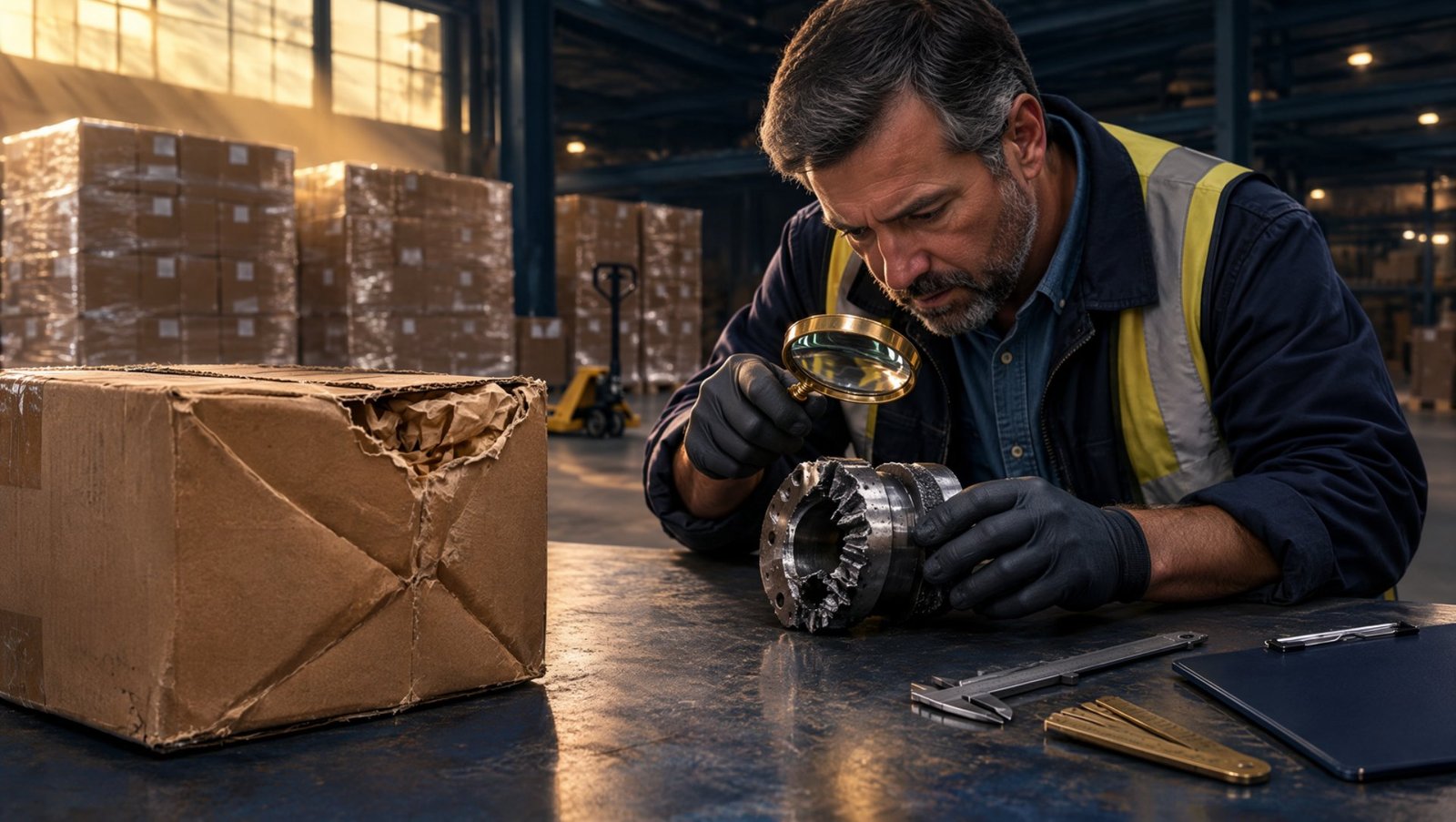
Photographs on this page are illustrative.