
India shipped fibre cement board to the Gulf, South Asia, East Africa, the United Kingdom and the United States across the last full trade cycle recorded in HS 6811 — and for a category that most buyers still think of as a commodity sheet, the spread of grades on offer is unusually wide. Two boards can carry the same thickness, the same nominal size and the same “non-asbestos” line on the invoice, and still differ by 300 kg/m³ in density, by 9 MPa in bending strength and by twenty years in stated lifespan.
This guide sets out how to source fibre cement board from India against a specification rather than a price, using the Wedge Industries Limited 2026 export range — WedgeCem® and WedgeClad® — as the worked example. Every figure below is quoted from the manufacturer’s published 2026 catalogue and the HS 6811 trade panel it carries. Where a value is grade-specific, the grade is named.

Where Indian fibre cement board actually goes
Fibre cement flat sheet trades under two HS subheadings: 6811.82 for non-asbestos cellulose fibre-cement sheets, panels and boards, and 6811.89 for other articles of non-asbestos cellulose fibre-cement. Getting this right on the shipping documents matters more than it looks — the 6811 family still contains asbestos-containing subheadings, and a misclassified consignment into a jurisdiction with an asbestos import ban invites an inspection you do not want.
The recorded destinations for Indian fibre cement board cluster in three places:
- Middle East — United Arab Emirates, Qatar, Oman, Saudi Arabia. This is the volume market, and it is the one where the 2400 × 1200 mm format dominates.
- South Asia — Bhutan, Nepal, Maldives. Short-haul, high-frequency, smaller consignments.
- Africa, Indian Ocean and the West — Kenya, Tanzania, Seychelles, the United Kingdom, the United States.
The flow runs the other way too. India itself imports fibre cement board, principally from Thailand, China, the United Arab Emirates, Germany, Taiwan and Mexico. That is worth knowing if you are a buyer, because it tells you the Indian supply base is not insulated from Thai and Chinese pricing — and it explains why a serious Indian exporter will declare country of origin per shipment rather than blanket-stamping every container “Made in India”.
Traded volume by thickness
| Thickness | Share of traded volume | Typical use |
|---|---|---|
| 12 mm | 28% | Tile backer, external sheathing, cold-store lining |
| 9 mm | 20% | Partition, duct enclosure, shaft wall, LGSF sheathing |
| 6 mm | 20% | Ceiling lining, dry partition facing, soffit |
| 18 mm | 18% | Structural flooring, mezzanine deck, external wall |
| 8 mm | 9% | Prefab internal skin, facade board |
| Others | 5% | 4.0–4.5 mm ceiling, 15–16 mm fire-rated, 20–24 mm heavy deck |
Read that table as a stocking instruction. Four thicknesses — 12, 9, 6 and 18 mm — account for 86% of everything traded. If you are opening a distribution position in a new market, those four in the 2400 × 1200 mm and 2440 × 1220 mm formats will cover the large majority of what walks through the door, and everything else can be brought in against a confirmed order.
What “non-asbestos” means, and what it does not
“Non-asbestos” is a statement about one ingredient. It tells you nothing about density, strength or durability, and buyers who treat it as a quality claim end up comparing a 1250 kg/m³ ceiling board against a 1600 kg/m³ compressed structural deck on price per sheet.
The uncured WedgeCem mix is 40% Portland cement, 50% high-purity quartz flour, 2% lime and 8% cellulose/PVA fibre. After autoclave curing, the matrix is approximately 90% calcium silicate and 10% cellulose fibre, and asbestos content is none across all grades and formats. That cured chemistry is what produces the properties buyers actually specify against: it is inorganic, so it offers no nutritional value to insects and no substrate for mould; it is non-combustible rather than merely fire-retardant; and it is inert at end of life, which is what makes the board recyclable as construction aggregate rather than a hazardous waste stream.
The practical consequence for a specifier: ask for the density and the test standard, not the marketing category. Every claim below is tied to one or the other.
Three density families, mapped to application
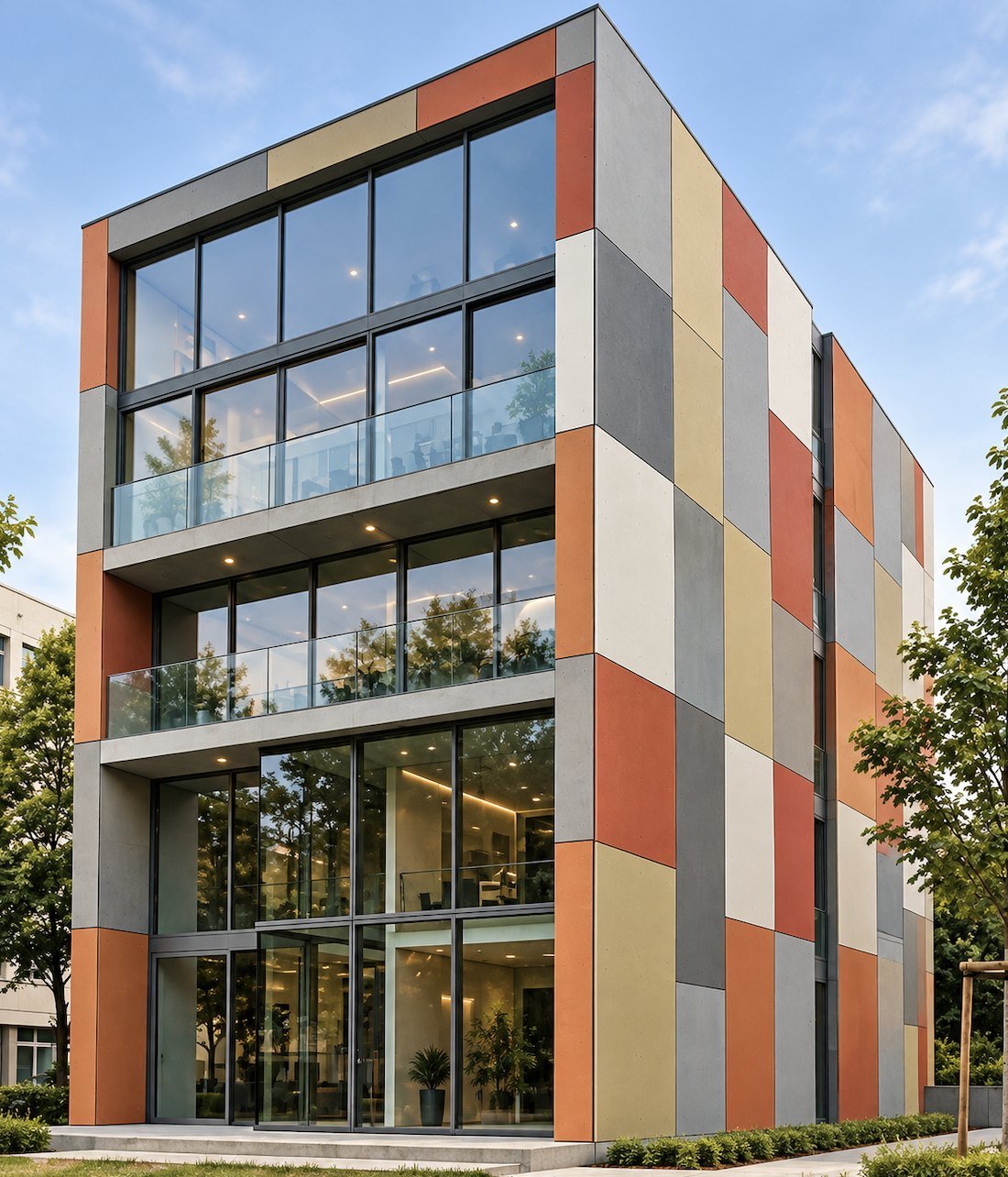
Selection in this range is governed by two variables only: density and thickness. Wedge splits the range into three families, and the mapping below is the fastest way to eliminate two-thirds of the catalogue in one pass.
| Family | Density / thickness | Ceiling & partition | Tile backer & prefab wall | External cladding, flooring & wet areas |
|---|---|---|---|---|
| WedgeCem MID WCB-M | 1250–1350 kg/m³ 4.0–9.0 mm | Primary — ceiling lining, dry partition facing, soffit, duct and shaft enclosure | Secondary — prefab internal skin at 8.0–9.0 mm | Not recommended |
| WedgeCem HIGH WCB-H | 1400–1500 kg/m³ 6.0–16.0 mm | Secondary — fire-rated wall lining and heavy-duty partition at 15–16 mm | Primary — tile backer, wet-area lining, prefab and LGSF wall sheathing | Secondary — external sheathing and cold-store lining at 12 mm |
| WedgeCem EXTRA WCB-X / WCL | 1400–1600 kg/m³ 7.5–24.0 mm | Not recommended | Secondary — mezzanine underlay and external wall build-ups | Primary — ventilated rainscreen facade, lap siding, structural flooring, marine and wet areas |
Two mistakes account for most of the failures in this product category, and both are visible in that table. The first is putting a MID-density board into a wet area or an external application, where it will absorb, move and eventually delaminate at the fixings. The second is over-specifying EXTRA compressed board for a suspended ceiling, where the extra 40 kg per sheet buys nothing except a heavier grid and a higher freight bill.
The twenty export-grade SKUs
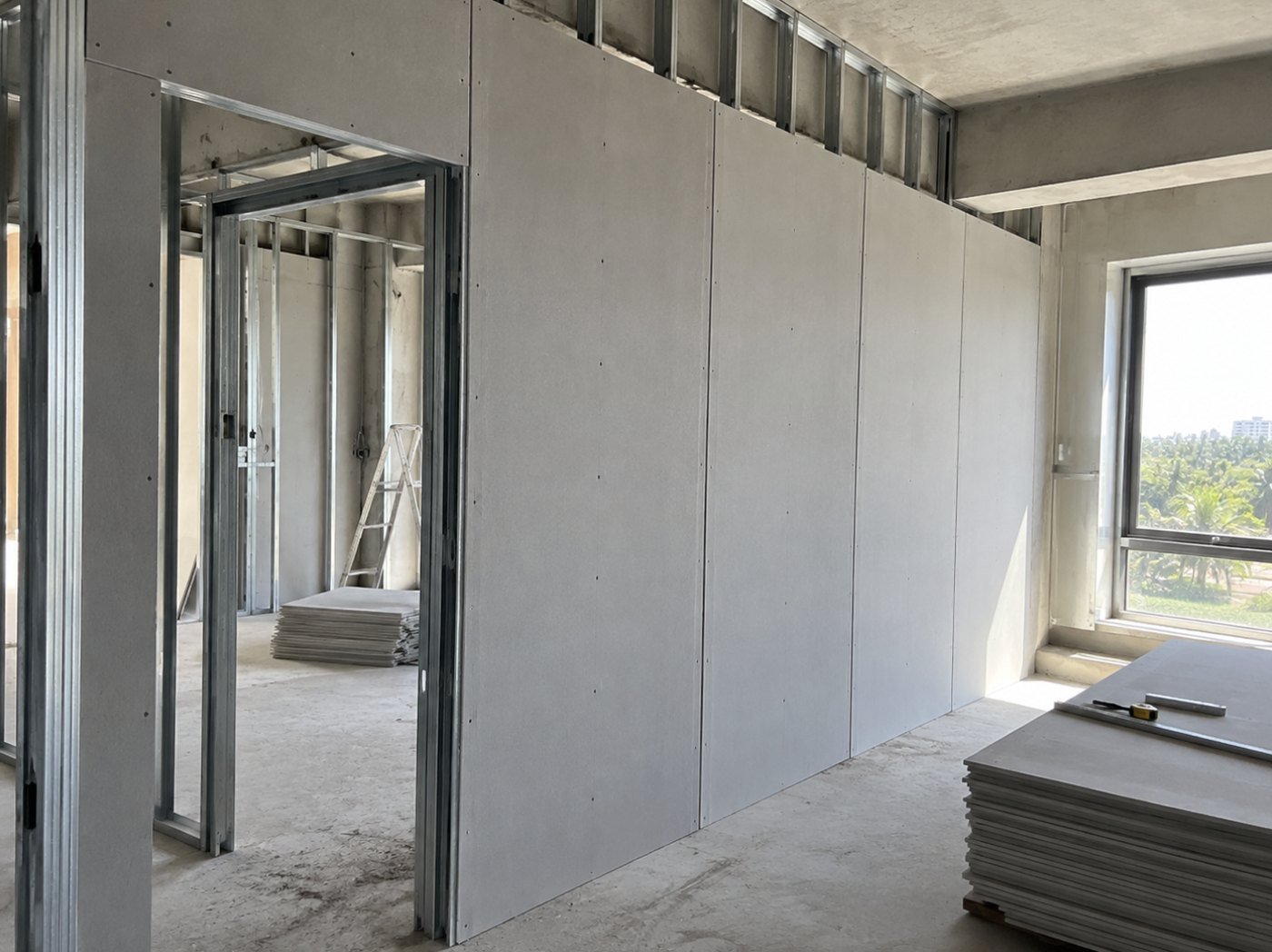
The 2026 export range is deliberately narrow — twenty quote-ready SKUs rather than an open-ended thickness ladder. The 2400 × 1200 mm and 2440 × 1220 mm formats in 6, 9, 12 and 18 mm together account for the large majority of all traded volume in HS 6811 fibre cement board, and the range is built around that fact.
| SKU code | Product | Size (mm) | Thk (mm) | Density (kg/m³) | Wt/board (kg) | Primary application |
|---|---|---|---|---|---|---|
| WCB-M-04-2440 | WedgeCem MID | 2440 × 1220 | 4.0 | 1250–1350 | 15.5 | Ceiling lining, dry partition facing |
| WCB-M-06-2440 | WedgeCem MID | 2440 × 1220 | 6.0 | 1250–1350 | 23.2 | Internal partition, ceiling, soffit |
| WCB-M-06-2400 | WedgeCem MID | 2400 × 1200 | 6.0 | 1250–1350 | 22.5 | Internal partition (India / GCC standard format) |
| WCB-M-08-2400 | WedgeCem MID | 2400 × 1200 | 8.0 | 1250–1350 | 29.9 | Partition, prefab internal skin |
| WCB-M-09-2440 | WedgeCem MID | 2440 × 1220 | 9.0 | 1250–1350 | 34.8 | Partition, duct enclosure, shaft wall |
| WCB-H-06-2440 | WedgeCem HIGH | 2440 × 1220 | 6.0 | 1400–1500 | 25.9 | Tile backer, wet-area lining |
| WCB-H-08-2440 | WedgeCem HIGH | 2440 × 1220 | 8.0 | 1400–1500 | 34.5 | Tile backer, prefab wall panel skin |
| WCB-H-09-2400 | WedgeCem HIGH | 2400 × 1200 | 9.0 | 1400–1500 | 37.6 | Prefab / LGSF wall sheathing |
| WCB-H-10-2440 | WedgeCem HIGH | 2440 × 1220 | 10.0 | 1400–1500 | 43.2 | Sheathing, mezzanine underlay |
| WCB-H-12-2440 | WedgeCem HIGH | 2440 × 1220 | 12.0 | 1400–1500 | 51.8 | Tile backer, external sheathing, cold-store lining |
| WCB-H-12-2400 | WedgeCem HIGH | 2400 × 1200 | 12.0 | 1400–1500 | 50.1 | Highest-volume export SKU — general construction |
| WCB-H-15-2440 | WedgeCem HIGH | 2440 × 1220 | 15.0 | 1400–1500 | 64.7 | Fire-rated wall lining, heavy-duty partition |
| WCB-H-16-2440 | WedgeCem HIGH | 2440 × 1220 | 16.0 | 1400–1500 | 69.0 | Fire-rated assemblies, riser and duct casing |
| WCB-X-12-2440 | WedgeCem EXTRA | 2440 × 1220 | 12.0 | 1500–1600 | 55.4 | Flooring underlay, external soffit, marine / wet |
| WCB-X-12-2500 | WedgeCem EXTRA | 2500 × 1250 | 12.0 | 1500–1600 | 58.1 | European / UK format flooring & cladding |
| WCB-X-18-2400 | WedgeCem EXTRA | 2400 × 1200 | 18.0 | 1500–1600 | 77.8 | Structural flooring, mezzanine deck, external wall |
| WCB-X-20-2440 | WedgeCem EXTRA | 2440 × 1220 | 20.0 | 1400–1500 | 92.3 | Heavy structural floor deck, industrial platform |
| WCB-X-24-2440 | WedgeCem EXTRA | 2440 × 1220 | 24.0 | 1400–1500 | 110.8 | Ultra-heavy floor deck, machine platform |
| WCL-U-08-3000 | WedgeClad UV-Coated Facade | 3000 × 1200 | 8.0 | 1400–1500 | 41.8 | Ventilated rainscreen facade, UV-stable finish |
| WCL-W-075-3000 | WedgeClad Wood-Grain Siding Plank | 3000 × 200 | 7.5 | 1300–1400 | 6.1 | Exterior lap siding, fascia, soffit, feature wall |
The full SKU list with weights, formats and grade references is set out in the fibre cement board catalogue (PDF). Alongside the boards, five accessory and small-format lines complete a supply position: WCT-04-595 and WCT-06-600 lay-in grid ceiling tiles (595 × 595 × 4 mm and 600 × 600 × 6 mm), WCL-T-08-2440 through-colour facade board in ten integral colours, WCA-JC-20 jointing compound in 20 kg pails, and WCA-SCR corrosion-resistant self-drilling fibre-cement screws supplied per 1,000.
Technical properties: the numbers that decide the specification
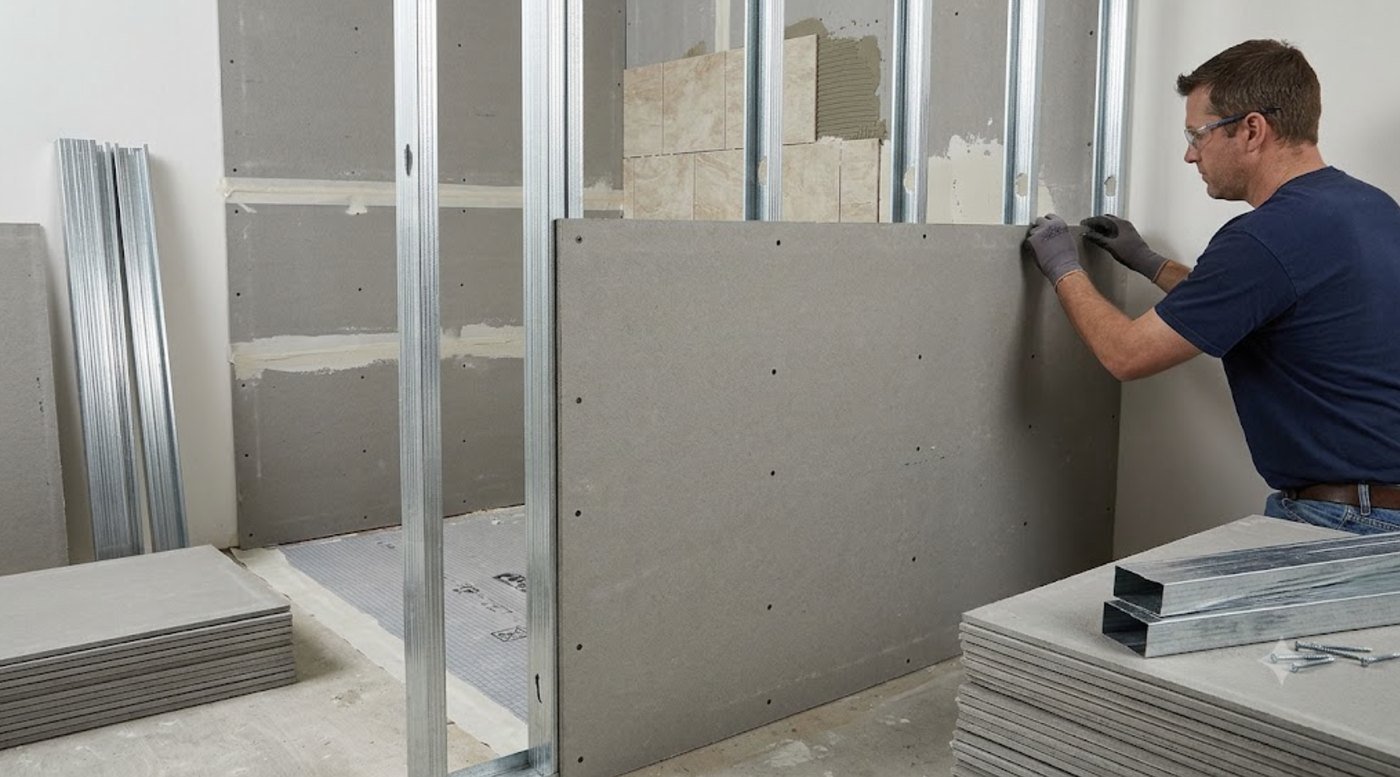
Three grade references carry the test data: WedgeCB13 (MID), WedgeCB14 (HIGH) and WedgeCB16 (EXTRA). When you request test certificates, request them against the grade reference, not the SKU.
| Parameter | WedgeCB13 (MID) | WedgeCB14 (HIGH) | WedgeCB16 (EXTRA) |
|---|---|---|---|
| Density (kg/m³) | 1300 | 1450 | 1500–1600 |
| Thickness range (mm) | 6–20 | 4.5–20 | 4.5–24 |
| Length / width (mm) | 1220–3050 / 610–1220 | 1220–3050 / 610–1250 | 1220–3050 / 610–1250 |
| Stated lifespan (years) | > 40 | > 50 | > 60 |
| Non-combustibility, BS 476 Part 4 | A1 | A1 | A1 |
| Surface spread of flame | Class 1 | Class 1 | Class 1 |
| Fire resistance | 60 min @ 12 mm | 60 min @ 12 mm | 60 min @ 12 mm |
| Bending strength, dry (MPa) | 13 | 15 | 22 |
| Bending strength, wet (MPa) | 10 | 12 | 16 |
| Impact shock resistance (kJ/m²) | 9 @ 6 mm | 9 @ 6 mm | 12 @ 9 mm |
| Screw withdrawal strength (N) | 1200 | 1200 | 1200 |
| Water absorption (%) | 35 | 30 | 32 |
| Moisture content (%) | 7.5 | 6–8 | 6–8 |
| Moisture movement (%) | 0.07 | 0.04–0.07 | 0.07–0.12 |
| Frost resistance (freeze–thaw cycles) | 25 | 25 | 25 |
| Acoustic insulation (dB) | 51 @ 6 mm | 51 @ 6 mm | 51 @ 6 mm |
| Thermal conductivity, ASTM C177 (W/m·K) | 0.167 | 0.25 | 0.27 |
| Dimensional tolerance, ISO 8336:2009 | Pass | Pass | Pass |
| Warm water / soak–dry, ISO 8336:2009 | Pass | Pass | Pass |
| Asbestos content | None | None | None |
Four rows in that table repay a second look.
- Thermal conductivity runs the opposite way to strength. MID is the best insulator in the range at 0.167 W/m·K; EXTRA is the worst at 0.27. Denser board is stronger and wetter-tolerant, and conducts more heat. If the board is doing thermal work in a build-up, that trade-off belongs in the calculation.
- Wet bending strength is the honest number for wet areas. MID drops from 13 to 10 MPa; EXTRA drops from 22 to 16. A board specified on its dry figure and installed behind a shower is being specified on the wrong figure.
- Moisture movement rises with density. EXTRA moves 0.07–0.12%, roughly double MID at the low end. On a 3 m facade run that is a joint detail, not a rounding error — which is why external work uses open drained or expressed joints rather than a filled flush joint.
- Fire resistance is a 12 mm number. The 60-minute figure is stated at 12 mm across all three grades. A 6 mm ceiling board is non-combustible and Class 1 for surface spread of flame, but it is not a 60-minute board.
Facade and siding: the WedgeClad side of the range
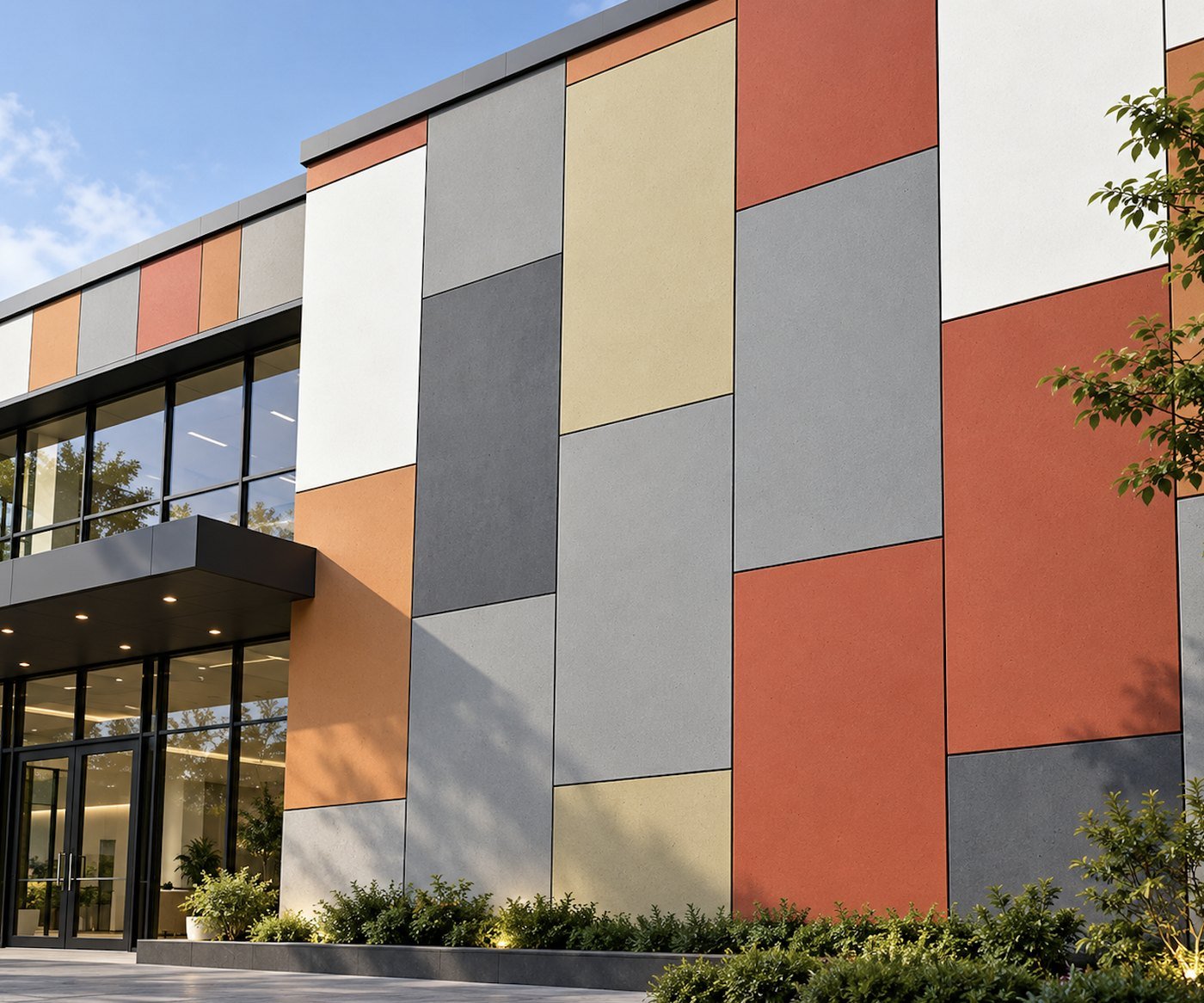
Rainscreen facade is where fibre cement earns its premium over the alternatives, and it is also where the specification traps sit. WedgeClad Facade is an 8 mm high-density board at 1400–1500 kg/m³, supplied two ways:
- WCL-U-08-3000 — UV-coated, 3000 × 1200 mm, 41.8 kg per board. The surface finish is a coating, so cut edges need sealing for appearance.
- WCL-T-08-2440 — through-coloured, 2440 × 1220 mm, in ten integral colours. Colour is achieved by mineral pigment in the mix and runs through the full board section, so cut edges require no edge sealing for appearance. On a facade with many cut panels around openings, that difference decides the site labour bill.
Both are non-combustible Class A1 to BS 476 Part 4 and rated Class 1 for surface spread of flame — the two lines that get a cladding product through a fire-safety review on a mid-rise building.
The siding plank, WCL-W-075-3000, is a 7.5 mm pre-painted lap plank at 3000 × 200 mm and 6.1 kg per plank, at 1300–1400 kg/m³ and also Class A1. Ten wood-grain finishes run from WEDGE-SP001 Pale Ash through Nordic White Oak, Natural Birch, Honey Oak, Golden Teak, Terracotta, Burnt Orange, Rosewood and Walnut to WEDGE-SP010 Charcoal. The same ten codes apply to the UV-coated facade board and to the through-colour board. Uncoated board is supplied Natural Grey as-manufactured across all WCB grades, or Off-White with a sanded face for ceiling and lining work.
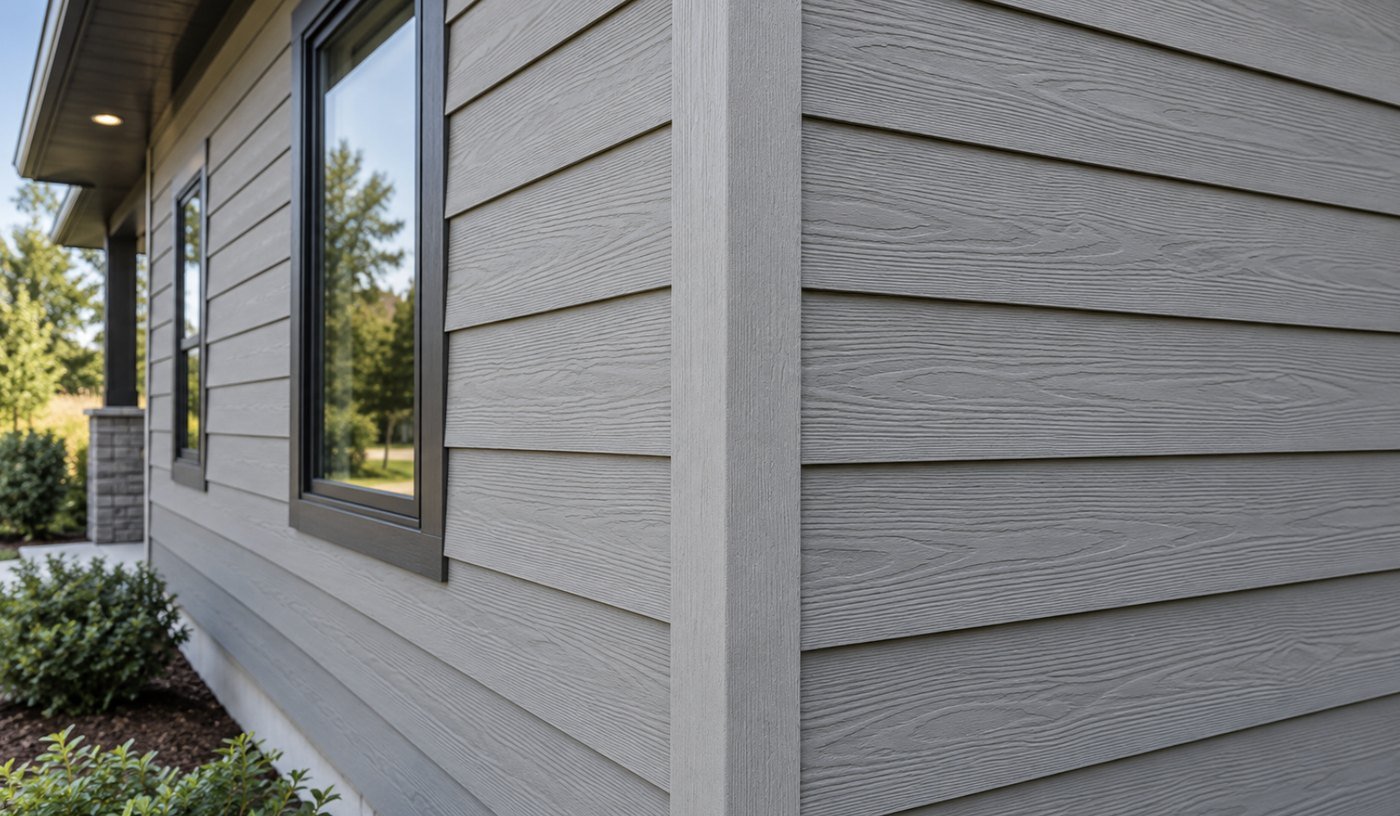
One procurement note: printed swatches are representations. Finish thickness tolerance is ±0.03 mm and a physical sample is supplied on request — and the physical sample governs. Approve colour off the sample, never off a catalogue page or a screen.
Standards and certification to ask for by name
A supplier who cannot name the standard is quoting a sheet, not a board. The WedgeCem and WedgeClad range is tested and declared against the following, and nothing beyond this list is claimed:
| Standard | Scope |
|---|---|
| ASTM C1185 | Sampling and testing of non-asbestos fibre-cement flat sheet |
| ISO 8336:2006 | Fibre-cement flat sheets — product specification and test methods |
| ISO 8337:2006 | Fibre-cement flat sheets — dimensions and physical requirements |
| BS 476 Part 4 | Non-combustibility — Class A1 |
| BS 476 Part 6 / 7 | Fire propagation and surface spread of flame — Class 1 |
| EN 12467 | Fibre-cement flat sheets — European product specification |
| ISO 9001:2015 | Quality management system |
| CE | Conformity marking for supply into the European market |
Three documents should travel with every consignment and should be named in your purchase order, not requested after arrival: the certificate of origin, the mill test certificate for the batch, and the MSDS. Country of origin is declared per shipment — India or China — so if your market applies a preferential duty rate or a trade-remedy measure by origin, that declaration is the document your customs broker will be working from. Our certificate of origin guide covers how the document is issued and what it must state; the HS code classification guide covers getting 6811.82 versus 6811.89 right at the outset.
Packing, container loading and minimum order
Fibre cement board is a weight-limited cargo, not a volume-limited one — with a single exception. Container quantities are calculated at nominal board weight against a working payload of 25 t for a 20′GP and 26 t for a 40′HQ.
| Format / thickness | Wt/board (kg) | Boards/pallet | Pallets/20′GP | Boards/20′GP | Boards/40′HQ |
|---|---|---|---|---|---|
| 6.0 mm — 2400 × 1200 | 22.5 | 80 | 13 | 1,040 | 1,120 |
| 9.0 mm — 2440 × 1220 | 34.8 | 60 | 11 | 660 | 720 |
| 12.0 mm — 2400 × 1200 | 50.1 | 40 | 12 | 480 | 520 |
| 18.0 mm — 2400 × 1200 | 77.8 | 25 | 12 | 300 | 325 |
| 24.0 mm — 2440 × 1220 | 110.8 | 20 | 11 | 220 | 232 |
| 7.5 mm plank — 3000 × 200 | 6.1 | 200 | 12 | 2,400 | 5,200 |
Note the last row. Siding planks are light enough that the container fills before it loads out — which is why a 40′HQ takes 5,200 planks against 2,400 in a 20′GP, more than double, while every board line in the table gains only around 8%. If you are mixing planks and boards, load the boards to weight and fill the remaining cube with planks.
Packing is a fumigated wooden pallet to ISPM 15, heat-treated, with rigid corner protectors on all four edges, a plastic cover over the full pallet and steel or PET strapping in a minimum of four bands. Each pallet label carries SKU, size, thickness, quantity and batch. Tolerances: ±0.03 mm on finish thickness, ±3% on quantity per order, ±7% on nominal board weight, and dimensional tolerance to ISO 8336:2006.
Minimum order quantity is one 20′GP, and mixed-SKU containers are accepted. For a first order into a new market that matters more than the headline price: it lets you land four thicknesses in one container, test the demand and reorder against real offtake rather than a forecast. Our container loading guide covers stuffing and weight-distribution practice, and the Incoterms 2020 guide covers where the cost and risk hand over.
Fixing and application: the rules that protect the warranty
Most fibre cement complaints are installation failures, not product failures. The guidance below applies to WedgeCem and WedgeClad boards fixed to light-gauge steel or timber framing; project-specific details, fire-rated assemblies and structural flooring build-ups are issued separately on request.
Substrate and framing
- Framing centres 400 mm or 600 mm, verified against board thickness and design load
- Framing to be plane within 3 mm over 2 m before boarding
- Boards stored flat, off the ground, under cover and dry before fixing
- Ventilated cavity of minimum 25 mm behind rainscreen facade board
Fasteners and spacing
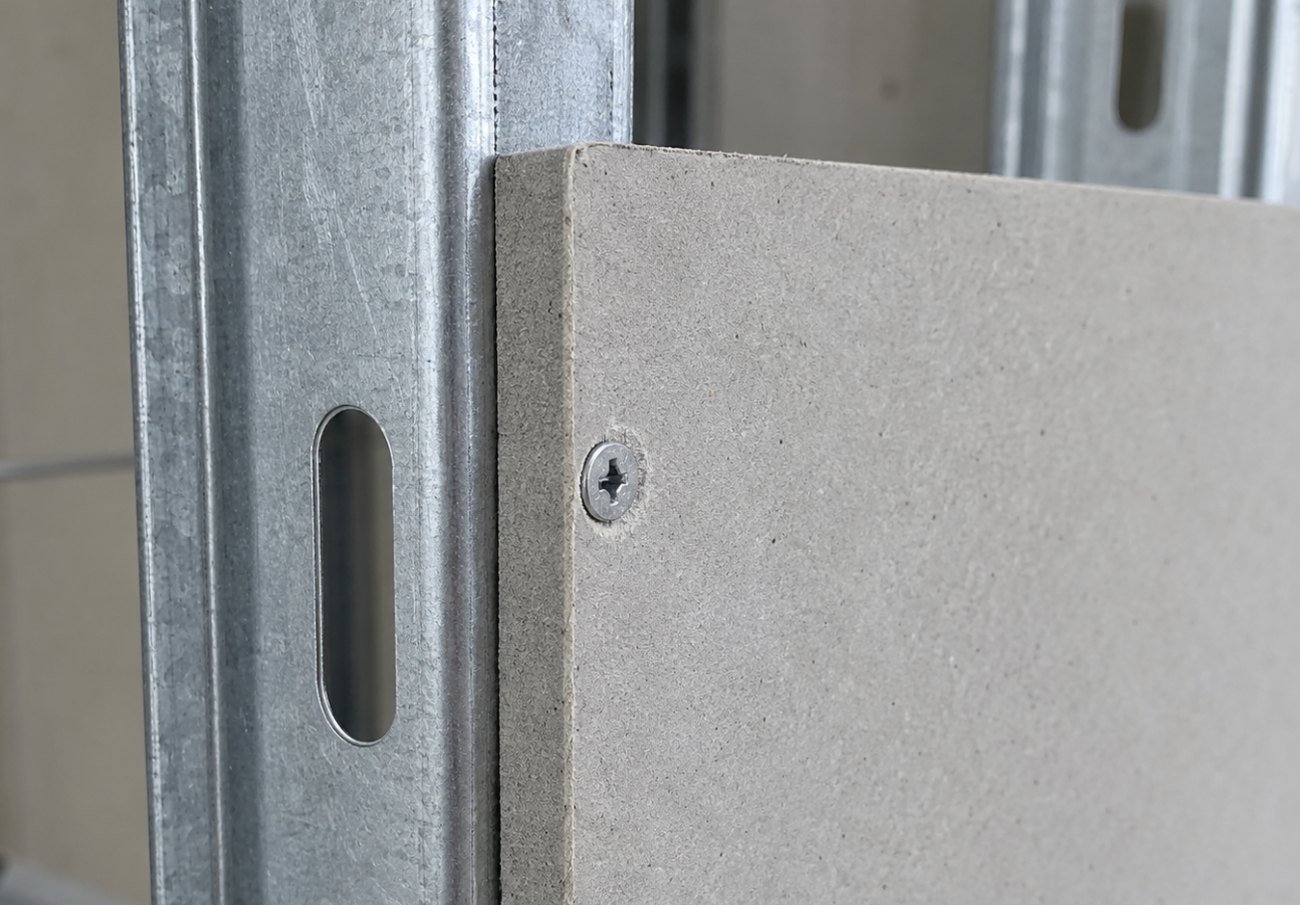
- Corrosion-resistant self-drilling fibre-cement screws (WCA-SCR)
- 200 mm centres at board edges, 300 mm centres at intermediate supports
- Minimum 12 mm from board edge, 50 mm from board corner
- Screws driven flush, not countersunk below the board face
- Screw withdrawal strength is 1200 N — do not over-torque
Joints and movement
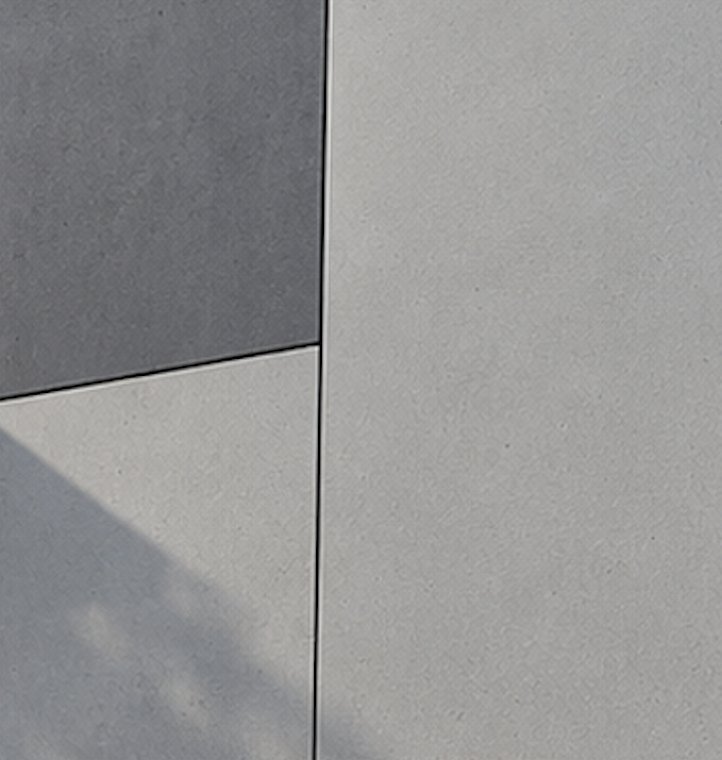
- Internal flush joints: 3–5 mm gap, tape and WedgeCem Jointing Compound (WCA-JC-20) in two coats
- External and facade work: open drained joint or expressed joint with a backing strip
- Allow for moisture movement of 0.04–0.12% depending on grade
- Do not fill rigidly across movement or structural joints
Cutting and PPE — read this one properly
The board contains no asbestos, but it does contain crystalline silica as quartz flour — 50% of the uncured mix. Dry cutting or sanding without extraction generates respirable crystalline silica, which is a regulated occupational hazard in most of the markets this board ships to. Non-asbestos does not mean dust-free.
- Score-and-snap for thin boards; carbide-tipped blade or diamond blade for thicker sections
- Cut outdoors, or with on-tool dust extraction; wet-cut where practicable
- FFP2 or better respiratory protection, eye protection and gloves
- Avoid dry sanding without extraction
All twenty export-grade SKUs with weights and formats, the full technical property table for grades WedgeCB13, CB14 and CB16, the standards and certification scope, colour and finish codes, packing and container loading quantities, and the condensed fixing and application guide.
Download the PDF cataloguePDF · 17 pages · 1.2 MBA specification checklist for your enquiry
Fibre cement board quotes are difficult to compare because suppliers quote different things. Send the following six items and you will get offers you can put side by side:
- SKU code or grade reference plus thickness — “12 mm fibre cement board” is not a specification; “WCB-H-12-2400, grade WedgeCB14” is.
- Format. 2400 × 1200 mm for India and the GCC, 2440 × 1220 mm as the principal export format, 2500 × 1250 mm for European and UK projects. Ordering the wrong format means cutting waste on every sheet.
- Quantity in boards or containers, and whether you will accept a mixed-SKU container.
- Destination port and Incoterm. Weight-limited cargo means the freight line moves the landed cost materially.
- Certification set required — CoO, MTC, MSDS as standard; add CE documentation for European delivery, and name any market-specific approval.
- Finish, where relevant: Natural Grey, Off-White sanded face, or a WEDGE-SP finish code for coated and through-colour product.
Wedge Industries Limited quotes against confirmed SKU, quantity and destination port, and issues lead time, packing list and certification set with the offer. Technical support for fire-rated assemblies, facade sub-framing and structural flooring build-ups is available at enquiry stage rather than after award — which is the stage at which it is actually useful.
Where to see the range on OZIANT
The full fibre cement board range is listed on OZIANT under the Wedge Industries Limited supplier profile, with a page per thickness and format. The most-specified lines:
- Fibre cement board 2400 × 1200 mm — the India / GCC standard format, 4.5–20 mm
- 12 mm fibre cement board — the highest-volume export thickness
- 9 mm, 6 mm and 18 mm — the other three thicknesses in the traded 86%
- 2440 × 1220 mm and 2500 × 1250 mm — the principal export and European formats
- Fire-rated fibre cement board and high-density board — 15–16 mm linings and CB16 compressed grades
- Tile backer board, floor board, ceiling tiles, cladding board and siding planks
Buyers in the recorded destination markets can start from the country pages for the United Arab Emirates, Qatar, Oman, Saudi Arabia, the United Kingdom and the United States. To price a specific consignment, post an RFQ with the SKU, quantity and destination port; every supplier on the platform carries a verification status you can check before you engage.
Frequently asked questions
Is fibre cement board from India genuinely asbestos-free?
It depends entirely on the grade you buy — HS heading 6811 still contains asbestos-containing subheadings, so the classification on the invoice is the first thing to check. Non-asbestos board classifies under 6811.82 or 6811.89. The WedgeCem and WedgeClad range states asbestos content as none across all grades and formats, with a cured matrix of approximately 90% calcium silicate and 10% cellulose fibre. Ask for the mill test certificate for the batch, not a general product statement.
Which thickness of fibre cement board should I order?
Four thicknesses account for about 86% of all traded volume: 12 mm (28%), 9 mm (20%), 6 mm (20%) and 18 mm (18%). As a rule, 4–6 mm for ceilings and dry lining, 8–9 mm for partitions and prefab skins, 12 mm for tile backer, external sheathing and cold-store lining, 15–16 mm for fire-rated wall linings, and 18–24 mm for structural flooring and mezzanine decks.
What is the minimum order quantity for export?
One 20′GP container, and mixed-SKU containers are accepted. Loading is weight-limited at a working payload of 25 t for a 20′GP and 26 t for a 40′HQ, so a 20′GP holds roughly 1,040 boards at 6 mm, 480 at 12 mm and 300 at 18 mm in the 2400 × 1200 mm format. Siding planks are the exception — they are volume-limited, at 2,400 planks per 20′GP and 5,200 per 40′HQ.
What fire rating does fibre cement board achieve?
All three WedgeCem grades are non-combustible Class A1 to BS 476 Part 4 and Class 1 for surface spread of flame to BS 476 Parts 6 and 7, with a fire resistance of 60 minutes stated at 12 mm. The 60-minute figure is thickness-dependent: a 6 mm ceiling board is non-combustible but is not a 60-minute board. Fire-rated assemblies are detailed separately and should be specified as an assembly, not as a board.
Which countries import fibre cement board from India?
Recorded destinations in HS 6811 trade data include the United Arab Emirates, Qatar, Oman and Saudi Arabia in the Middle East; Bhutan, Nepal and the Maldives in South Asia; Kenya, Tanzania and the Seychelles in Africa and the Indian Ocean; and the United Kingdom and the United States. India also imports fibre cement board, principally from Thailand, China, the UAE, Germany, Taiwan and Mexico.
Do I need special precautions when cutting fibre cement board?
Yes. The board contains no asbestos, but quartz flour makes up 50% of the uncured mix, so cutting and sanding generate respirable crystalline silica. Cut outdoors or with on-tool dust extraction, wet-cut where practicable, use FFP2 or better respiratory protection with eye protection and gloves, and avoid dry sanding without extraction. Score-and-snap works for thin boards; use a carbide-tipped or diamond blade on thicker sections.
About the data
Product specifications, SKU list, technical properties, packing data, container quantities, standards list and finish codes in this article are taken from the Wedge Industries Limited WedgeCem® and WedgeClad® Product Catalogue 2026 (2026 Export & Project Range). Trade figures — destination markets, supply origins into India and the thickness split — are from Volza shipment data for HS 6811, covering Indian exports from December 2021 to February 2024 and Indian imports from February 2022 to September 2023; percentages are approximate and rounded. Board weights are nominal at mid-range density with a ±7% tolerance, and container quantities are indicative and confirmed against the packing list at time of loading. Standards, certification scope and country of origin are declared per shipment and should be verified against the certificates issued with your consignment. Photographs are illustrative and do not depict the manufacturer or facilities described. Published 06-09-2026.